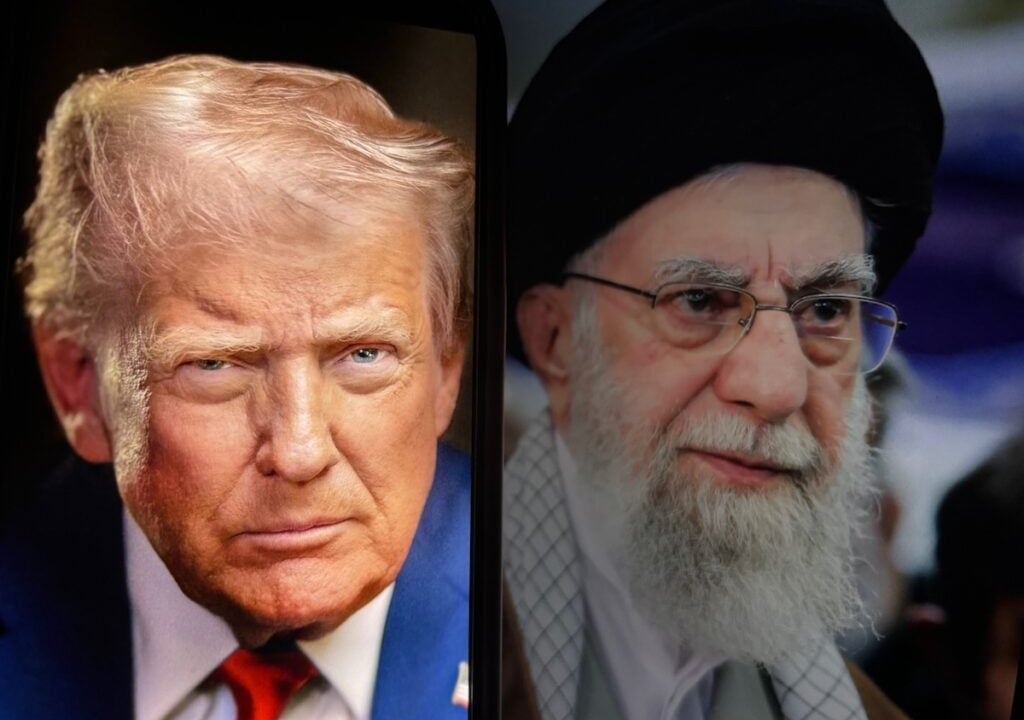
Iran's Hardened Posture: Larijani Rejects US Diplomacy Amidst Rising Tensions
In a powerful declaration that reverberated across the Middle East and beyond, Ali Larijani, the influential head of Iran's Supreme National Security Council (SNSC), unequivocally rejected any notion of negotiations with the United States. His stern pronouncement on March 2nd dismantled media reports suggesting backchannel diplomacy with the Trump administration, reinforcing a hardened posture from Tehran amidst escalating regional hostilities. Larijani's statements, delivered via a post on X (formerly Twitter), not only shut the door on immediate talks but also laid direct blame on then-US President Donald Trump for plunging the region into what he termed "chaos" through his "delusional fantasies."
This diplomatic rupture comes at a critical juncture, following a wave of US-Israeli strikes on Iranian targets and prior nuclear negotiations that had seemingly reached an impasse. Larijani's emphatic denial and sharp criticism underscore Iran's immediate prioritization of confrontation over dialogue, signaling a challenging path forward for any potential de-escalation efforts. For a deeper dive into his specific accusations, consider reading Larijani Blames Trump's 'Delusional Actions' for Mideast Chaos.
A Firm 'No' to US Diplomacy: Larijani's Unambiguous Stance
Ali Larijani, a figure of immense political weight within Iran, serving as a long-time adviser to the late Supreme Leader Ayatollah Ali Khamenei and secretary of the SNSC, left no room for ambiguity regarding Tehran's diplomatic intentions. He directly refuted claims, notably reported by The Wall Street Journal, that Iranian officials were attempting to reopen nuclear negotiations through intermediaries, such as Omani mediators.
His post on X was direct and cutting: "Iran will not negotiate with the United States." This public dismissal of diplomatic overtures, particularly in the wake of intense military exchanges and the killing of Supreme Leader Ayatollah Ali Khamenei, represented a significant moment. It showcased a deliberate strategy by Tehran to project strength and resolve, rather than appear eager for dialogue under duress. The Supreme National Security Council, which Larijani helms, is Iran's primary body for national security and foreign policy, making his statements carry immense official weight and reflect the collective stance of the Iranian leadership.
The timing of this declaration is crucial. Amidst widening military confrontation involving Iranian and US-Israeli forces across the region, any perception of weakness or eagerness to negotiate could be seen as detrimental to Iran's strategic interests. Larijani's move to quickly deny claims of backchannel diplomacy served to quell internal dissent or external speculation, consolidating a united front against perceived American pressure. This hardening of Iran's posture ensures that, at least in the near term, direct diplomatic channels with Washington remain firmly off the table.
Blaming Trump: "Delusional Fantasies" and Regional Chaos
Beyond merely rejecting negotiations, Larijani launched a scathing attack on former US President Donald Trump, holding him personally responsible for the escalating instability across the Middle East. He specifically cited Trump's "delusional fantasies" as the driving force behind the region's current state of "chaos."
Larijani's criticism was multifaceted:
- Regional Instability: He asserted that Trump's policies had "plunged the region into chaos," implying a direct causal link between US actions and the deteriorating security landscape. This perspective seeks to shift blame for the current crises away from Iran and squarely onto the US administration.
- Risk to American Troops: Larijani suggested that Trump, with his "false hopes," was now fearful of "more American troop casualties." This was a pointed accusation, implying that Trump's policies had needlessly endangered American servicemen and women.
- "America First" into "Israel First": Perhaps the most cutting remark was Larijani's assertion that Trump had transformed his signature slogan of "America First" into "Israel First." He argued that Trump had "sacrificed American soldiers for Israel's quest for power." This narrative aims to portray US policy in the region as serving Israeli interests at the expense of American lives and broader regional stability, a common rhetorical device used by Tehran to undermine US legitimacy.
This direct and personal condemnation of a sitting (at the time) US President is highly significant. It reflects a deep-seated distrust and animosity that transcends policy differences, touching upon perceived ideological and strategic betrayals. Such rhetoric not only energizes Iran's domestic base but also seeks to resonate with anti-American sentiments across the broader Middle East. For additional context on this specific rejection and blame, see Iran's Larijani: No Talks With US Amid Trump Blame.
The Hardened Posture: Implications for Regional Stability
Larijani's categorical rejection of negotiations and his aggressive rhetoric against the US signal a significant shift towards a more confrontational approach from Tehran. This hardened posture carries profound implications for the already volatile Middle East:
- Reduced Diplomatic Off-Ramps: With public rejection of talks, channels for de-escalation become severely limited. In times of military confrontation, open lines of communication are vital to prevent miscalculation and unintended escalation. Shutting these down increases the risk of wider conflict.
- Increased Risk of Miscalculation: When diplomacy is sidelined, military actions often become the primary means of communication. This can lead to a dangerous cycle of action and reaction, where each side misinterprets the other's intentions, potentially leading to an uncontrollable conflict.
- Reinforcing Internal Cohesion: For Iran, this firm stance likely serves to reinforce national unity and resilience against external pressure. By portraying the US as an aggressor driven by "delusional" policies, the leadership can galvanize public support and legitimize its own defensive actions.
- Shaping International Perception: Iran's leadership is also attempting to shape international perceptions, presenting itself as a victim of aggressive US policies and deflecting responsibility for regional instability. By clearly stating they "did not initiate the invasion," they aim to portray their actions as defensive.
- Long-Term Standoff: This declaration suggests a prolonged period of standoff between Iran and the US, where confrontation, rather than cooperation, remains the default setting. Any future diplomatic engagement would likely require a significant shift in posture from either side, or a new, severe crisis.
Understanding these strategic underpinnings is crucial for analysts and policymakers. It's not just about a rejection of talks, but a clear signal of intent and a defined strategy for managing geopolitical tensions. Iran's leadership, through Larijani, is sending a strong message that they will not be coerced into negotiations under perceived duress.
Beyond the Headlines: Analyzing Iran's Strategic Calculus
Larijani's firm declaration is not merely an emotional outburst but a calculated strategic move by Tehran. Several factors likely underpin this hardened posture:
- Domestic Audience: Rejecting negotiations with the "Great Satan" plays well with hardline factions and a segment of the Iranian population that views any talks with the US as a sign of weakness or betrayal. This strengthens the regime's internal legitimacy, especially in the context of recent unrest or leadership transitions.
- Leverage and Positioning: By refusing to negotiate under pressure, Iran attempts to enhance its future bargaining position. It signals that any talks must occur on Tehran's terms, without preconditions or the appearance of being forced to the table by military action.
- Testing the Waters: This strong rejection could also be a way to test the resolve of the US and its allies. By escalating rhetoric and hardening its stance, Iran forces its adversaries to reconsider their own strategies and potential responses.
- Consolidating Power: In the aftermath of significant regional events, leaders often consolidate power by projecting strength and unwavering resolve. Larijani's statements align with this, showcasing a united and uncompromising front.
- Historical Precedent: US-Iran relations are marred by decades of distrust and broken agreements. From Iran's perspective, past experiences, particularly the US withdrawal from the JCPOA (Iran nuclear deal) under the Trump administration, underscore the futility of negotiating with Washington unless there are fundamental shifts in US policy and guarantees.
For individuals tracking geopolitical developments, it's important to look beyond the immediate headlines. Consider who is speaking, what their role is, and when the statement is made. Larijani, as Secretary of the SNSC, speaks with the full authority of the state, making his words a definitive policy statement rather than mere political rhetoric. This suggests that Iran is prepared for a sustained period of tension, prioritizing strategic autonomy and perceived strength over immediate diplomatic engagement.
Conclusion
Ali Larijani's emphatic rejection of negotiations with the United States marks a critical juncture in the fraught relationship between Tehran and Washington. His accusations against former President Trump for fomenting regional "chaos" through "delusional fantasies" underscore a deep-seated animosity and a strategic decision to prioritize a hardened, confrontational posture over immediate diplomatic engagement. This stance, articulated by one of Iran's most influential security figures, signals reduced diplomatic off-ramps, heightens the risk of miscalculation, and positions Iran for a prolonged period of tension in the Middle East. As military exchanges continue and rhetorical escalation persists, the world watches closely, aware that the absence of dialogue in such a volatile region carries profound and potentially dangerous implications.