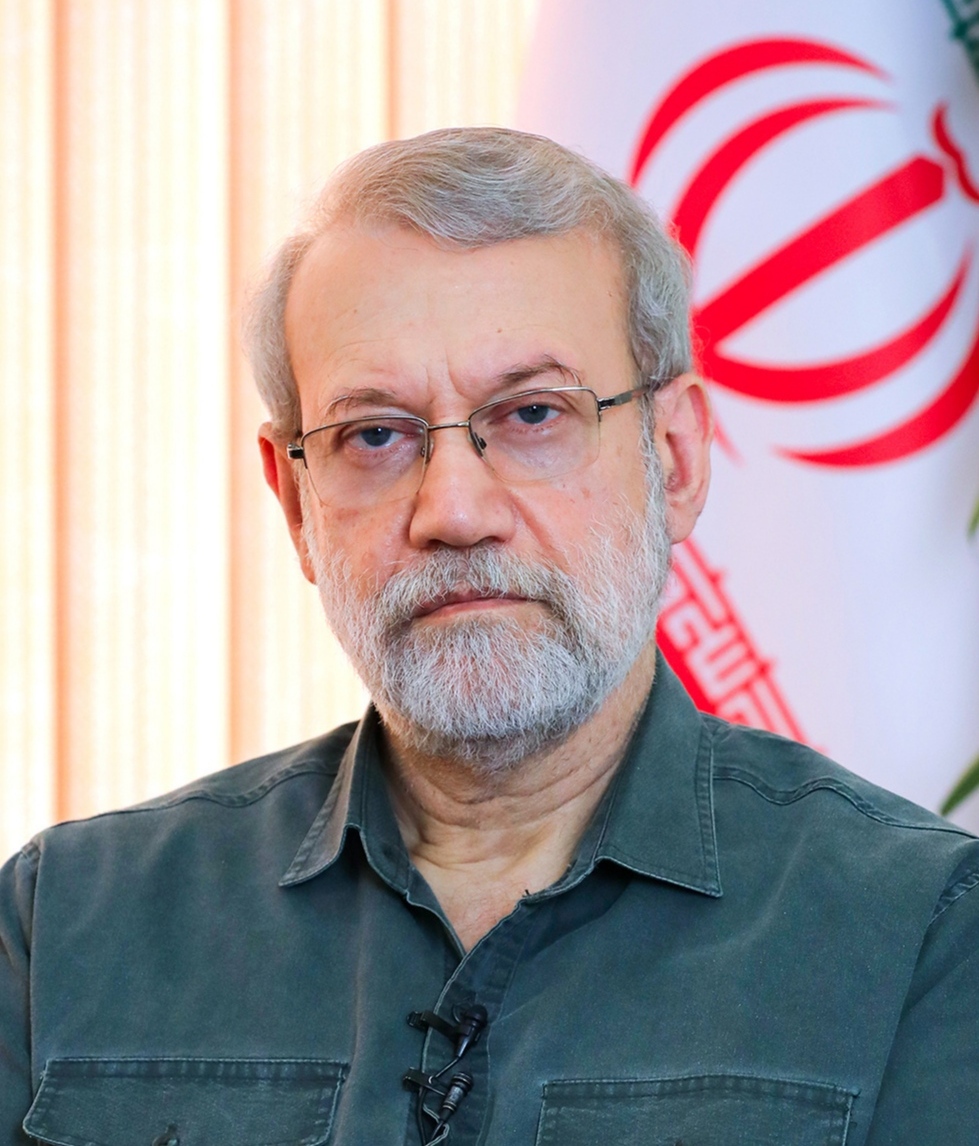
Iran's Larijani: Diplomacy on Hold Amidst Blame for US Policies
Iran's political landscape is often characterized by its intricate blend of overt posturing and subtle backchannel diplomacy, particularly concerning its contentious relationship with the United States. However, recent statements from Ali Larijani, the influential head of Iran’s Supreme National Security Council, have unequivocally shut the door on any immediate prospects of talks with Washington. His firm rejection, coupled with sharp criticism aimed directly at former US President Donald Trump, underscores a deeply entrenched distrust and a strategic decision to prioritize a hardened posture over dialogue, especially following a period of heightened regional tensions and military exchanges.
Larijani's pronouncements, delivered via a post on X (formerly Twitter) on March 2, were not merely a denial of specific media reports suggesting Iran sought to initiate talks with the Trump administration. They represented a broader, more definitive stance: "Iran will not negotiate with the United States." This declaration follows a wave of reported US-Israeli strikes on Iran and comes at a time when the region is grappling with an escalating conflict, reinforcing Tehran’s message that diplomacy is currently off the table. The rejection serves as a powerful signal, both domestically and internationally, that Iran is not only unwilling but strategically disinclined to engage with what it perceives as an antagonistic and unreliable counterpart. The very notion of *larijani usa* talks, once a flicker of possibility, has now been publicly extinguished by one of Iran's most senior security figures.
Larijani's Resolute Stance: "No Negotiations" Amidst Regional Turmoil
Ali Larijani's recent public statements have solidified Iran's official position, clearly drawing a line in the sand regarding potential diplomatic engagements with the United States. As the powerful secretary of Iran's Supreme National Security Council, Larijani's words carry significant weight, effectively debunking any lingering speculation about clandestine overtures from Tehran. Reports, particularly from outlets like The Wall Street Journal, had suggested that Iranian officials, including Larijani himself, had attempted to revive nuclear negotiations through intermediaries, notably via Omani mediators. Such claims, which emerged following a period of intense military activity and regional instability, including reported US-Israeli strikes on Iranian targets, were swiftly and publicly refuted by Larijani.
His assertion, "We will not negotiate with the United States," is more than just a denial; it's a strategic communication designed to project strength and resolve. It signals a clear preference for confrontation over dialogue in the immediate term, especially as military exchanges spread beyond Iran and Israel into neighboring countries, raising fears of a wider regional conflagration. This hardened posture is a calculated move, potentially aimed at consolidating domestic support, deterring further external pressure, and preventing any perception of weakness or desperation for dialogue. For international observers, this explicit rejection of *larijani usa* talks indicates a deepening of the diplomatic rupture, making pathways to de-escalation significantly more challenging.
Blaming Trump: "Delusional Fantasies" and Regional Chaos
Central to Larijani's rejection of negotiations is his scathing critique of former US President Donald Trump, whom he holds personally responsible for the current state of turmoil in the Middle East. Larijani accused Trump of having plunged the region into chaos with his "delusional fantasies" and "false hopes." This direct and unfiltered criticism goes beyond mere political rhetoric; it aims to dismantle the legitimacy of any US overtures by attributing malicious intent and catastrophic consequences to Trump's past policies.
Larijani specifically alleged that Trump's "delusional actions" had transformed his self-proclaimed slogan of "America First" into "Israel First," implying that American resources and lives were being sacrificed for Israel's geopolitical ambitions. He further argued that Trump, having destabilized the region, was now apprehensive about potential American troop casualties. This narrative serves multiple strategic purposes for Iran: it deflects blame from Tehran for regional tensions, frames Iran as a victim of external aggression rather than an instigator, and seeks to undermine American influence by portraying its foreign policy as erratic and self-serving. The accusation that Trump's policies have led to a scenario where US soldiers are "sacrificed for Israel's quest for power" is a potent charge, designed to resonate with anti-American sentiments both within Iran and across the broader Middle East. Understanding this deep-seated grievance and the strategic framing of Trump's actions is crucial to comprehending the current impasse in *larijani usa* relations. Readers interested in a deeper dive into this aspect can explore
Larijani Blames Trump's 'Delusional Actions' for Mideast Chaos.
The Complex Dance of Diplomacy and Confrontation
The current state of *larijani usa* relations highlights a stark contrast to previous periods of engagement, particularly the nuclear negotiations that led to the Joint Comprehensive Plan of Action (JCPOA). While those talks, even under strained circumstances, demonstrated a capacity for dialogue, Larijani's recent statements unequivocally signal a strategic shift towards confrontation. This shift isn't arbitrary; it's deeply rooted in historical grievances, a perceived breach of trust (especially after the US withdrawal from the JCPOA), and the escalating military pressures Iran faces.
When Donald Trump claimed that Iran's "new leadership" was seeking renewed negotiations, Larijani's immediate and public refutation served as a powerful counter-narrative. It dismissed any notion that Tehran was desperate for talks, thereby stripping the US of potential leverage. In international relations, public statements often serve as carefully crafted signals, designed to influence not only the opposing party but also domestic audiences and regional allies. Iran's decision to publicly reject negotiations can be seen as an assertion of sovereignty and a refusal to bow to external pressure, even at the risk of further isolation or escalation. The country's top security official, through this hardened posture, implies that current conditions are not conducive for meaningful dialogue, and any attempt at negotiation would be perceived as a capitulation. This dynamic underscores the challenge of finding diplomatic off-ramps when both sides are operating from positions of distrust and perceived strength.
Understanding Iran's Hardened Posture
Iran's current stance, characterized by a firm rejection of negotiations, isn't a sudden development but rather the culmination of several internal and external factors. Ali Larijani, a long-time adviser to the late Supreme Leader Ayatollah Ali Khamenei and a key figure in Iran's political establishment, wields significant influence. His position as Secretary of the Supreme National Security Council places him at the nexus of foreign policy and national security decision-making, lending immense authority to his pronouncements.
One critical, though often overlooked, detail is the context surrounding Larijani's statements: they came "following the killing of Supreme Leader Ayatollah Ali Khamenei." While the original context doesn't elaborate on the direct link to Khamenei's passing, it's plausible that a period of transition or mourning within Iran's highest echelons could contribute to a more unified, uncompromising front externally. Such moments often demand a strong display of national resolve.
Furthermore, internal political dynamics, coupled with persistent external pressures like economic sanctions and targeted military strikes, compel Iran's leadership to adopt a defiant posture. This is a strategy to maintain domestic legitimacy, rally public support against foreign adversaries, and project an image of steadfastness in the face of perceived aggression. The widening scope of military exchanges, extending beyond the immediate Iran-Israel conflict into neighboring territories, further solidifies the view within Tehran that engagement with the US is futile without a fundamental shift in American policy. This hardening of resolve is a complex strategic choice, and for a more detailed understanding, one can refer to
Iran's Hardened Posture: Larijani Rejects US Diplomacy.
The Broader Geopolitical Ripple Effect
Larijani’s explicit dismissal of talks carries significant implications for the broader geopolitical landscape of the Middle East and beyond. When a major regional power like Iran signals an unwillingness to engage diplomatically with the US, it inevitably heightens the risk of miscalculation and escalation. For regional allies of the US, such as Saudi Arabia and the UAE, Iran’s hardened posture could be interpreted as a green light for more aggressive proxy engagements or a justification for further defense spending. Conversely, for adversaries, it could signal a window of opportunity to exploit the diplomatic vacuum.
European powers, who have historically attempted to bridge the gap between Washington and Tehran, find their diplomatic efforts severely hampered. The absence of direct channels exacerbates regional instability, making it harder to address pressing issues from nuclear non-proliferation to maritime security. Moreover, global powers like Russia and China, both with vested interests in the region, watch closely. Their responses to a more confrontational Iran and a disengaged US could further reshape alliances and power dynamics. Understanding these ripple effects is crucial for any international actor navigating the volatile currents of the Middle East, as the potential for a wider regional war becomes a more palpable threat when diplomacy is sidelined.
Conclusion
Ali Larijani's emphatic declaration that Iran "will not negotiate with the United States," coupled with his direct attribution of regional chaos to former President Donald Trump's "delusional fantasies," marks a critical juncture in the fraught relationship between Tehran and Washington. This definitive stance, articulated by one of Iran's most senior security officials, not only dismisses reports of attempted backchannel diplomacy but also signals a strategic decision to prioritize a hardened posture over engagement, at least for the foreseeable future. The implications for the Middle East are profound, suggesting a prolonged period of elevated tensions and reduced diplomatic off-ramps. As the complex dance of regional and international powers continues, the absence of direct dialogue between *larijani usa* will undoubtedly contribute to an already volatile geopolitical landscape, making the path towards de-escalation increasingly uncertain.